 ONLINE PORTAL
 LOCATIONS
 EVENTS
 ABOUT
ABOUT
September is National Suicide Prevention Awareness Month. This month can provide an opportunity to discuss the ongoing mental health crisis, the alarming increase in work-related suicides, and what you can do to help.
In recent years, the Occupational Safety and Health Administration (OSHA) and the Federal Department of Labor have begun to emphasize the importance of addressing mental health in the workplace as key to reducing injury and illness rates among employees. OSHA has noted that recent studies conducted by the Centers for Disease Control and Prevention (CDC) have shown a concerning uptick in suicide rates among working age adults. It can be difficult to discuss mental health in the workplace, because that is a space where personal problems are typically left at the door. However, creating an environment at work where anyone can reach out for help when they are in crisis is necessary to prevent suicides and other long term mental health issues.
Resources
Suicide & Crisis Hotline- Call or Text 988
The National Institute for Occupational Safety and Health (NIOSH) published an educational study which asserts that stressful job conditions, in combination with individual and situational factors, contribute to a higher risk of injury or illness. Job-related stress can lead to poor health and even injury for workers. Reducing job-related stress from the workplace is important in ensuring that everyone has access to a safe and healthy work environment.

The CDC states that the workplace can contain several factors which have been shown to contribute to higher suicide risks among workers.
The reduction of these factors may lead to better mental health outcomes for employees:
- Access to lethal means (e.g. the ability to obtain things such as firearms and medications)
- Long working hours
- Low job security, low pay, and job stress
- Workplace bullying
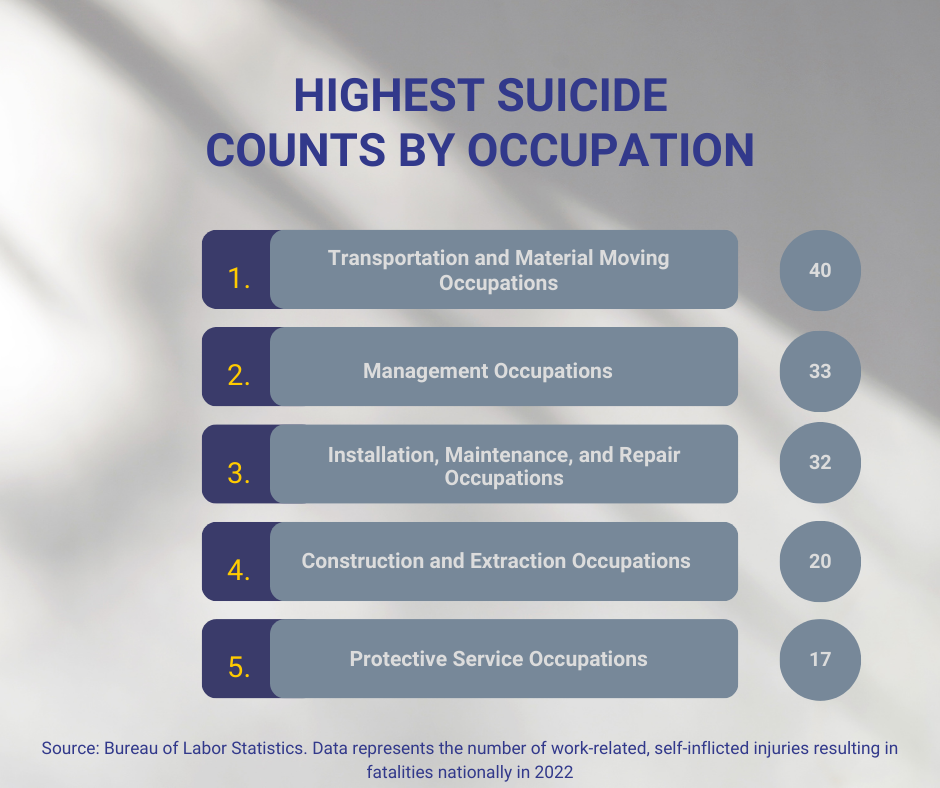
The effects of suicide can impact individuals in any industry or occupation. There are trends though that show a higher prevalence of suicide in some occupations more than others.
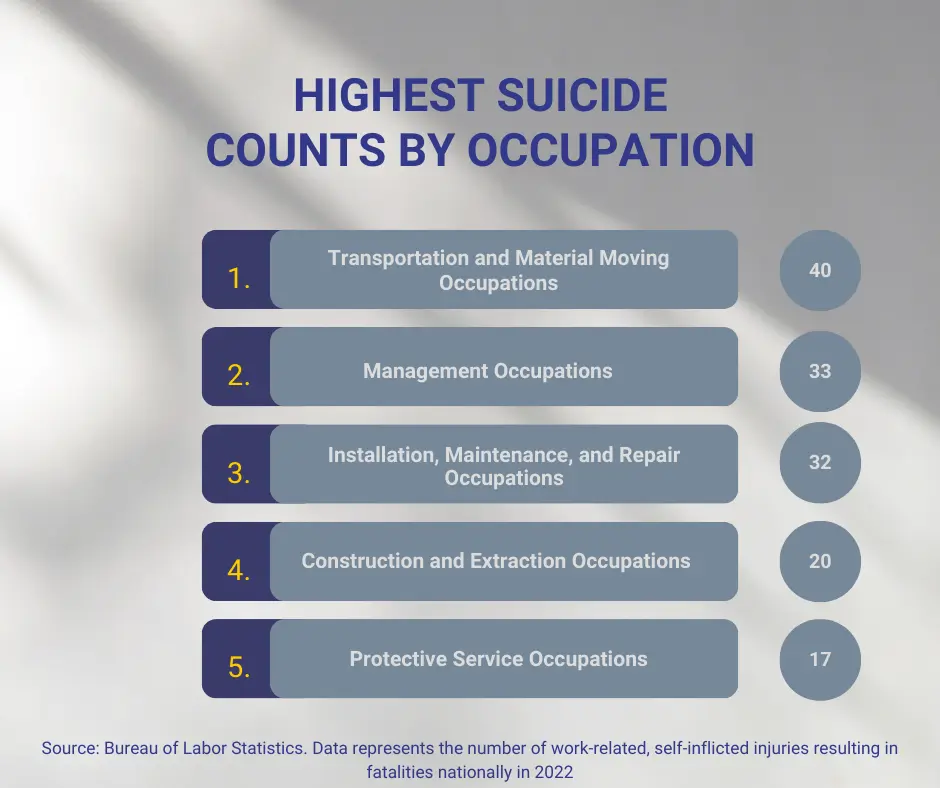
These occupations demonstrated the top five highest counts of work-related suicide during the reference year 2023. Transportation and Material Moving workers had the highest count of work-related suicide nationally in 2023. According to the Bureau of Labor Statistics, in the Commonwealth of Virginia, Transportation and Material movers made up over 300,000 of the state’s workers as of 2024.
This month, we aim to honor those who lost their lives and encourage further education and awareness concerning mental health in the workplace. It’s important to know that resources are available for individuals who are struggling as well as for those who want to learn more about how they can support their colleagues.
The Virginia Department of Labor and Industry’s What If? Campaign challenges employers and employees to ask the question: What if you could go your whole career injury free? Mental health struggles are just as critical to preventing career-ending harm as avoiding physical hazards. We encourage your team to start a conversation this Suicide Prevention Awareness Month:
- Host a Safety Includes Mental Health toolbox talk.
- Share the 988 Crisis Lifeline number in breakrooms, newsletters, paystubs, and safety meetings.
- Encourage peer support programs or employee resource groups.
Caring for one another is essential to workplace safety. Visit https://doli.virginia.gov/what-if/ to learn more.
Together in Strength, Dignity, Hope, and Purpose
If you or someone you know is struggling or in crisis, help is available. Call or text 988 or chat 988lifeline.org to reach the 988 Suicide & Crisis Lifeline.
Additional Resources
2025 Suicide Prevention Awareness Month Toolkit
Substance Abuse and Mental Health Services Administration (SAMHSA) toolkit with resources and information.
Role of Employers in Preventing Suicides
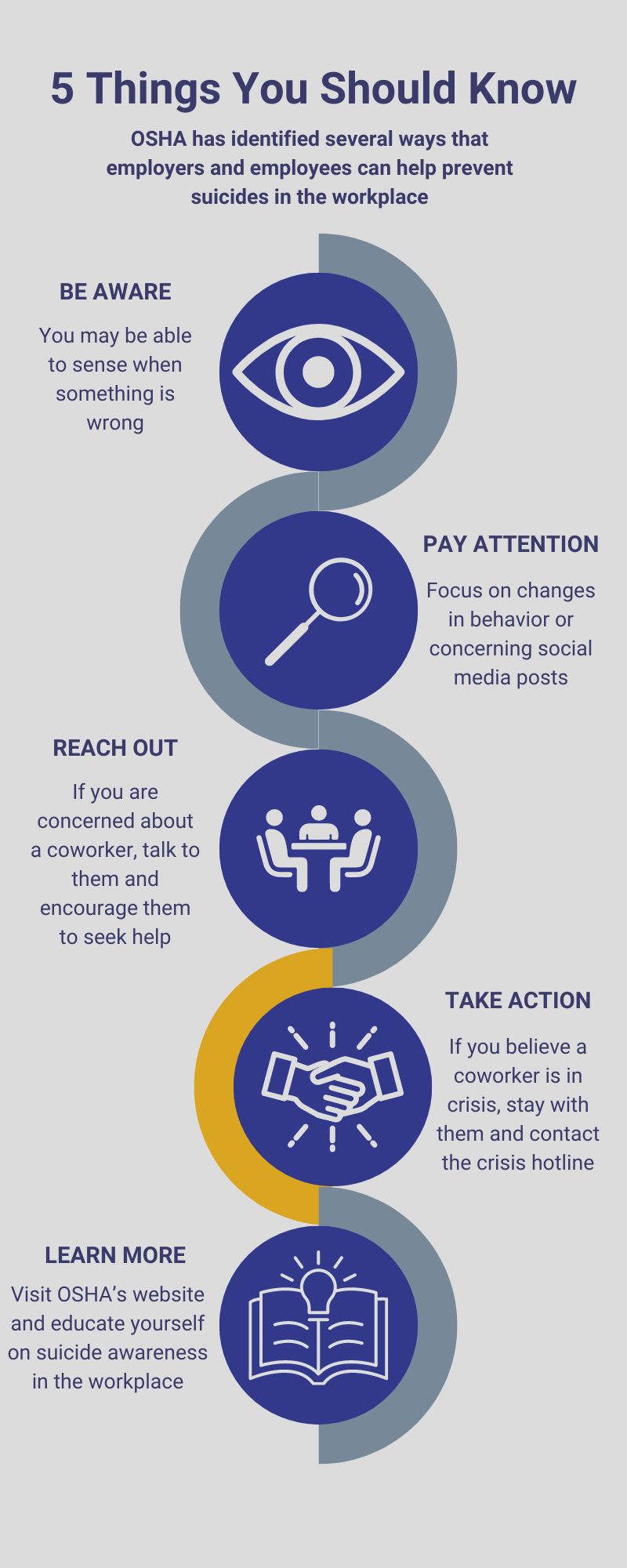
OSHA graphic displaying ways in which employers can engage in suicide prevention in the workplace.
NIOSH STRESS…At Work Publication
A publication by NIOSH highlighting the effects of job stress on the worker and how it can lead to adverse health and work outcomes.
CDC statistics and resources for suicide prevention in the workplace.
American Foundation for Suicide Prevention
Provides resources and aid to those affected by suicide, including Risk Factors and Warning Signs
The Center for Construction Research and Training (CPWR) – Opioid Resources
Provides resources to help prevent opioid deaths in construction.
Construction Industry Alliance for Suicide Prevention (CIASP)
Provides resources, articles, and websites.
Provides resources on how to address workplace suicide for workers, managers, and industry associations.
Provides recommendations on how to start a conversation in the industry, and three keys for providing help
U.S. Department of Veterans Affairs – Suicide Prevention
Provides resources for veterans and their loved ones, friends, and health care providers.