 ONLINE PORTAL
 LOCATIONS
 EVENTS
 ABOUT
ABOUT
DOLI is convening a Certified Payroll Work Group pursuant to HB 569/SB 518 (2026) to examine the feasibility of a certified payroll reporting portal and database under Virginia’s prevailing wage law. The meetings will be held virtually on September 3, 2026 and September 22, 2026. Members of the public will have an opportunity to comment at the end of each meeting. For more information, please visit: https://commonwealthcalendar.virginia.gov/Event/Details/78550
Certified Payroll Work Group (HB569/SB 518)
Virginia is developing a workplace safety standard to help protect workers from heat illness in both indoor and outdoor workplaces.
The 2026 General Assembly enacted legislation requiring the Virginia Safety and Health Codes Board to adopt a Heat Illness Prevention Standard by May 1, 2028. The standard will establish requirements for employers to help prevent heat-related illness, including providing drinking water, access to shade or climate-controlled areas when practicable, rest breaks, acclimatization, employee training, emergency response procedures, and additional protections during high-heat conditions. (§ 40.1-44.2. Standards for heat illness prevention)
This March, the construction industry and stakeholders are coming together to celebrate Women in Construction Week, a national initiative spearheaded by the National Association of Women in Construction (NAWIC). This year’s theme is “Level Up, Build Strong” which recognizes the achievements of women in the trades and inspires the next generation to pursue careers in construction. Join DOLI in celebrating Women in Construction Week by visiting https://nawic.org/wic-week/.
At the Virginia Department of Labor and Industry (DOLI), we are proud to join this national celebration and spotlight the women who are helping build the Commonwealth’s infrastructure, economy, and communities.
As of 2024, there were approximately 230,000 workers in the construction industry in Virginia according to the Bureau of Labor Statistics (BLS). Of that total, data from the American Community Survey shows that about 12% of workers in the construction industry were women.
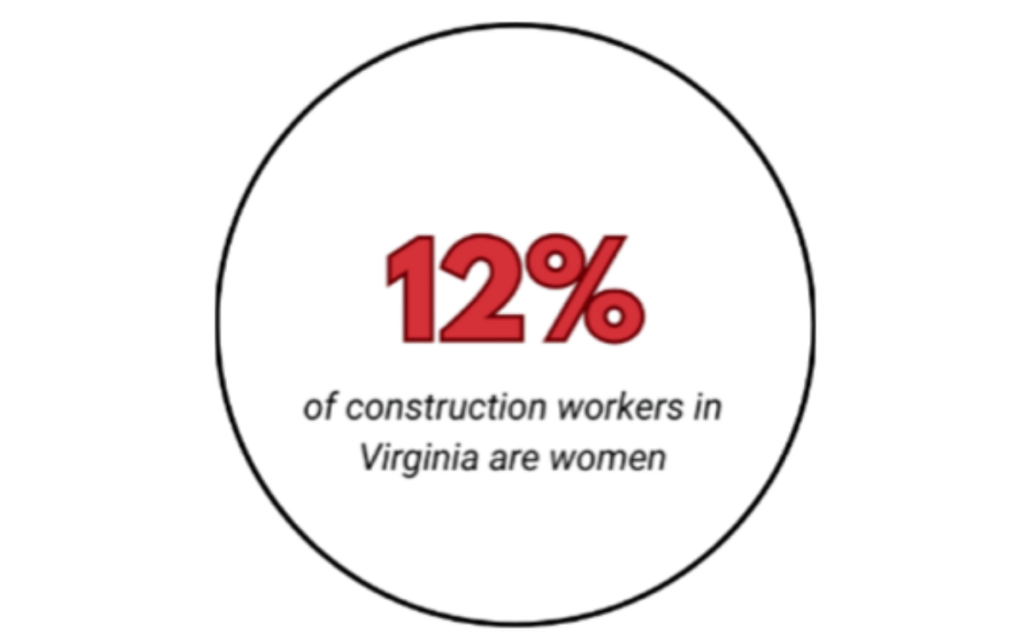
In Virginia from 2023-2024, 4% of the nonfatal injuries and illnesses that occurred in the private construction industry involved women, but as noted they made up only 12% of construction workers in the state. Overall, female workers made up 44% of nonfatal work-related injuries and illnesses resulting in days missed or job transfer across all private industries in 2023-2024.
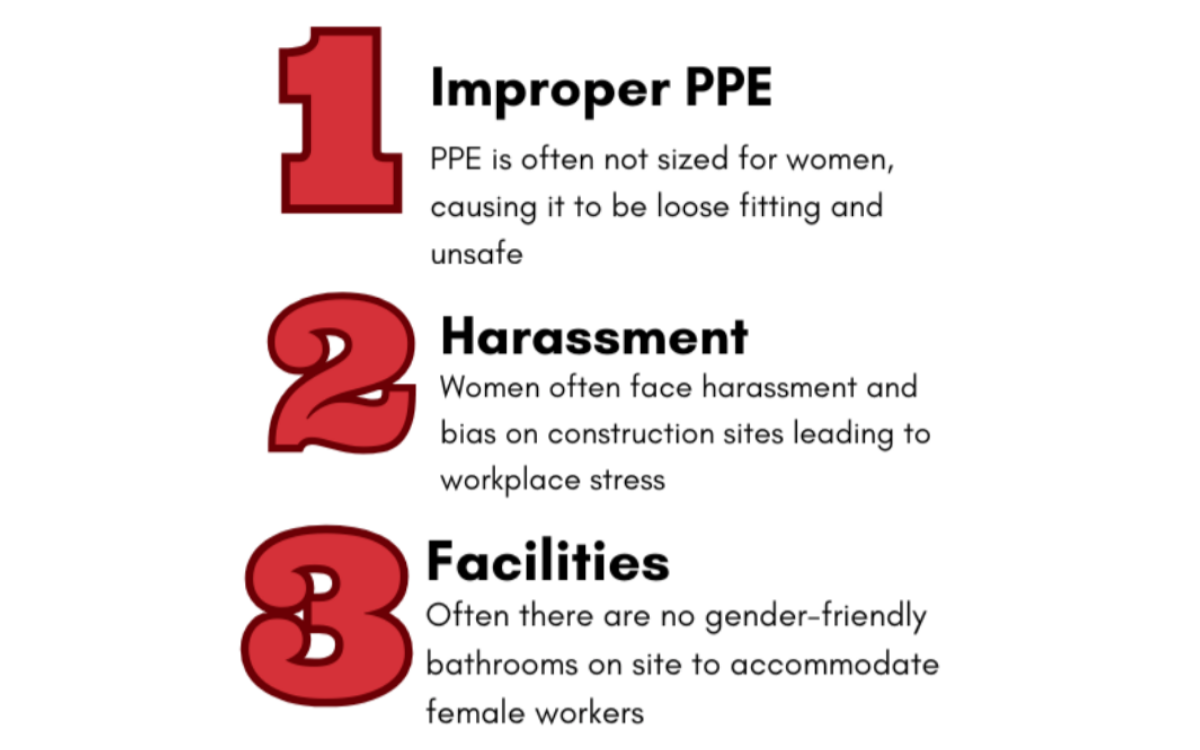
Some of the most common issues faced by women in construction are:
At DOLI, our goal is to ensure safe and healthful workplaces for all Virginians. Through cooperative programs, training and compliance assistance, we work to support employers and employees across the Commonwealth, including those in the construction industry.
One of the ways we work with our partners to advance safety excellence is through Virginia’s Voluntary Protection Programs (VPP). VPP recognizes employers who go above and beyond regulatory compliance to implement comprehensive safety and health management systems that protect their workforce.
Among our VPP partners are leaders who embody the spirit of “Level Up, Build Strong” including woman-owned construction companies that demonstrate a strong commitment to worker safety. That’s why we are proud to celebrate one of our VPP partners this Women in Construction Week.
Spotlight: Women-Owned Construction Companies in VPP BEST Programs:
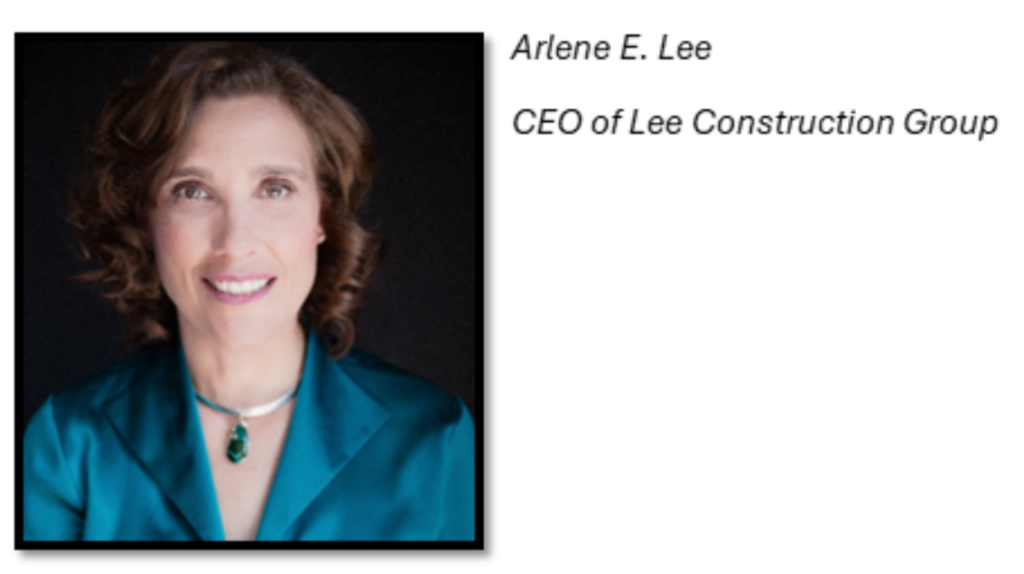
Lee Construction Group is a Virginia BEST Level 1 Participant.
The Lee Construction Group, Inc. traces its roots back to 1939, evolving from a highly skilled father and son team, Bob and Bobby Lee, who built and restored fine and historic homes across Central Virginia under the name R. E. Lee & Son, Inc., to a group of independent businesses engaged in the commercial building construction industry. Our businesses provide the full life cycle of building service.
We believe every project is a self-portrait of the people who built it. We autograph our work with diligent effort, determination, pride and excellence. We are committed to realizing our clients’ vision with the highest level of construction services in Central Virginia in a culture of continuous improvement that strives for excellence through our founding values –
Pioneering. Honorable. Professional.
The Virginia BEST Program (Building Excellence in Safety, Health and Training) is a strategic partnership between the VOSH Program and the Associated General Contractors of Virginia (AGCVA) designed to encourage and recognize AGCVA members who voluntarily implement highly effective safety and health management systems to benefit construction workers and reduce or eliminate injuries, illnesses and fatalities on construction sites in Virginia. All applicants must be in good standing of the Associated General Contractors of Virginia (AGCVA).
We had the chance to interview Arlene E Lee from Lee Construction Group for this post.
What inspired you to pursue a career in construction and lead a woman-owned company?
Like many women in the Industry, I was surrounded by a family business. My pathway is not typical. I accepted leadership after the unexpected passing of my husband, our fourth generation in our five-generation family business. I didn’t work my way up, I came in at the top. Our lives are not always linear, but we take the experiences we learn along the way to meet the moment.
What does Women in Construction Week mean to you and your team?
Half of one percent of CEOs, in commercial construction, are women. There are many that are capable but are often overlooked. Shining a light on talent that exists can only be good for the Industry in the long run and create better pathway for women.
What advice would you give to women considering a career in construction today?
We need you, your energy, determination, and creativity!
How do you foster a strong culture of safety and leadership within your organization?
I know what it’s like to have a loved one leave for work and not come home. I don’t want anyone to ever have to go through that. Safety is the beginning, middle, and end of everything we do. We have a top-down, bottom-up, side-to-side approach involving everyone on our team. This approach has been a key part of our involvement in the Virginia BEST program. The BEST program has been a fantastic tool in focusing our efforts to live into our commitment to each person making it home safe at the end of the day.
We believe leadership happens at all levels and we include leadership and conflict resolution training at all levels in the organization. One needs to first learn to lead themselves. We foster opportunities for both men and women in all of our leadership programs. This removes barriers women often experience in lack of mentorships or risk of impropriety.
What accomplishment are you most proud of as a woman-owned construction company?
I am most proud of the learning culture that is pervasive through our organization. We lean into our founding values of Pioneering. Honorable. Professional. While we are a SWaM* company we have the technology and know-howcomparable to the “Big Boys” but in a whole person and family-focused envelope. It is important to me that people like coming to work. We are intentional about nurturing a culture that both works hard and has fun doing it.
*SWam is Small, Women-Owned, and Minority-owned Business
Find out more about DOLI’s cooperative programs at https://doli.virginia.gov/vosh/vpp/.

Richmond, VA (January 2026) — The Virginia Department of Labor and Industry (DOLI) is proud to announce that James (Jim) S. Frederick has been appointed Commissioner of the agency by Governor Abigail Spanberger.
As Commissioner, Frederick leads DOLI’s operations and oversight, including administration of Virginia’s occupational safety and health state plan, enforcement of labor and employment laws, and regulation of commercial boilers and pressure vessels.
“DOLI’s work touches every corner of the Commonwealth, and since 1898, the agency has served Virginia’s citizens, employers, and employees,” said Commissioner Frederick. “I am honored to lead and serve alongside the dedicated professionals who advance our mission to make Virginia a better place to work, live, and do business. By working collaboratively with workers, employers, and partners, we will continue strengthening protections, promoting best practices, and supporting safe, fair, and healthy workplaces where people and businesses can thrive.”
Frederick brings more than 35 years of experience advancing worker safety, health, and rights at the local, state, and national levels. Prior to his appointment, he served from 2021 to 2025 as Deputy Assistant Secretary of Labor for Occupational Safety and Health at the U.S. Department of Labor, where he led national OSHA operations and regulatory initiatives.
In 2025, he joined NEXUS HSE, LLC as a Principal, partnering with organizations to design and strengthen industry-leading safety and health programs. His expertise includes developing and improving safety and health management systems and serious injury and fatality prevention programs grounded in human and organizational performance principles. He has also served as a Senior Fellow with the McElhattan Foundation’s Ending Death on the Job Program, which focuses on eliminating workplace hazards that lead to worker fatalities and serious injuries.
Earlier in his career, Frederick spent many years with the United Steelworkers Union as Assistant Director of Health, Safety, and Environment. In that role, he worked directly with workers and employers to reduce injuries and illnesses while strengthening compliance with worker protection laws.
Frederick holds a Master of Science in Environmental Health and Safety Management from Rochester Institute of Technology and a Bachelor of Science in Environmental Health from Purdue University. He received Purdue University’s Distinguished Alumnus Award in 2022 and the College of Health and Human Sciences Distinguished Alumni Award in 2024.
Pursuant to Va. Code § 40.1-28.7:8, the term “low-wage employee” as applied to covenants not to compete has been calculated by the Virginia Department of Workforce Development and Advancement to include all employees who earn an average of less than $1,507.01 per week. “Low-wage employee” also includes an individual who has independently contracted with another person to perform services independent of an employment relationship and who is compensated for such services by such person at an hourly rate that is less than the median hourly wage for the Commonwealth for all occupations as reported, for the preceding year, by the Bureau of Labor Statistics of the U.S. Department of Labor.
Effective July 1, 2025, a “low-wage employee” also includes an employee who, regardless of average weekly earnings, is entitled to overtime compensation under the provisions of the Fair Labor Standards Act for any hours worked in excess of 40 hours in any one workweek.
Any employer who enters into, enforces, or threatens to enforce a covenant not to compete with any low-wage employee as defined by the statute will be in violation of the statute, and subject to a suit for damages, attorneys’ fees, and liquidated damages, and civil monetary penalties assessed by the Commissioner.
Additionally, the section contains a posting requirement for employers which advises,
“Every employer shall post a copy of this section or a summary approved by the Department in the same location where other employee notices required by state or federal law are posted.” Posting a copy of the Code will meet the requirements for notice to employees required under the law.
For any questions about current wage rates or requirements under the law, please contact the Department’s Division of Labor & Employment Law at laborlaw@doli.virginia.gov. For further information about the 2026 rate’s calculation, please click here.
The Virginia Department of Labor and Industry (DOLI) is proud to announce the launch of a new brand identity and website (doli.virginia.gov) to enhance the customer experience, marking a significant step in the Agency’s commitment towards public outreach, and accessibility.
The new DOLI logo represents a fresh, modern identity that is clearer, more approachable, and better aligned with the important work we do for the people of the Commonwealth. This updated logo and website design also better connects all of DOLI’s programs under one umbrella. DOLI’s Outreach Programs, such as the Voluntary Protection Programs – Challenge, STAR, BEST, and BUILT – as well as SHARP and VILO also adopted new identities and logos to make it clear to our customers when they are interacting with the Agency or a business with a DOLI-awarded designation.
This new website has been thoughtfully crafted to enhance customer experience, making it easier for users to find the information they need quickly and efficiently. Whether you are a worker seeking resources, a parent looking to help their child obtain a youth employment certificate, a community member wanting to learn more about our initiatives, our new website is designed to meet your needs. Additionally, the new modern site prioritizes design and navigation, creating better web browsing experience for all stakeholders.
For more information about the Agency’s new brand identity and website, please visit www.doli.virginia.gov or follow us on our official social media channels.
Effective July 30, 2025, 16VAC15-70, Local Government Union Requirements and Employee Protections, has been adopted as a final regulation. The regulation has been adopted in response to the 2020 legislative change allowing counties, cities, or towns to recognize labor unions pursuant to the adoption of relevant ordinance or resolution. The Virginia Department of Labor and Industry (DOLI) has promulgated this regulation to clarify that the statutes that currently apply to labor union elections, solicitation of union membership, and collection of union dues apply to local government public employers, employees, and labor organizations. The regulation can be reviewed on the Commonwealth Legislative Information System.
DOLI has sent a letter to local government employers currently participating in a collective bargaining agreement advising them of the regulation and the Department’s role in assuring compliance with the law. A copy of the letter can be found here.
About the Agency:
It is the mission of the Virginia Department of Labor and Industry (DOLI) to make Virginia a better place in which to live, work, and conduct business. DOLI’s Labor and Employment Law Division administers and enforces the laws of the Commonwealth that govern employee pay, the employment of children, and certain other statutes that relate to the workplace. Additional information about coverage and requirements under the new regulation can be obtained by contacting the Division at laborlaw@doli.virginia.gov.
RICHMOND – The Virginia Department of Labor and Industry (DOLI) announces that the Virginia minimum wage rate will increase to $12.77 effective January 1, 2026, in accordance with Virginia law. All Virginia employers must pay covered employees at a rate not less than the minimum wage.
“Virginia’s Minimum Wage Act allows for gradual adjustment of the minimum wage rate in response to economic conditions.” said DOLI Commissioner Gary G. Pan. “The new minimum wage will ensure the Commonwealth remains the leading destination for businesses and job seekers alike.”
Under Virginia law, the Commissioner of the Department of Labor and Industry has the duty to establish an adjusted state hourly minimum wage annually. The new minimum wage is calculated by adding the current minimum wage to the product of the current minimum wage and percentage increase of the United States Average Consumer Price Index, as published by the Bureau of Labor Statistics of the U.S. Department of Labor. The current minimum wage rate for 2025 is $12.41. According to the U.S. Department of Labor Bureau of Labor Statistics, the 2024 percentage increase in the Consumer Price Index for all items, all urban consumers (CPI-U), is 2.9%. Therefore, the new adjusted state hourly minimum wage is $12.77 ($12.41 + [$12.41 x .029] = $12.77). The Virginia adjusted state hourly minimum wage rate for January 1, 2026 until January 1, 2027 is $12.77. This calculation will continue to be used for annual minimum wage rate adjustments.
The minimum wage applies to most employees in Virginia, including full-time, part-time, and temporary workers. However, certain exemptions exist, such as for some seasonal and job-specific categories. Under the Fair Labor Standards Act, an employer may pay a tipped employee no less than $2.13 per hour, but their total earnings (the combination of wages and tips received) must meet Virginia’s minimum wage rate. For more information about the minimum wage increase and Virginia’s minimum wage laws, visit: www.doli.virginia.gov.
DOLI sent a letter to business groups in Virginia, to provide notification of the increase, and a copy of the letter can be found here.
About the Virginia Department of Labor and Industry
DOLI is an executive branch agency, under the Virginia Secretary of Labor, overseeing the Virginia Occupational Safety and Health (VOSH) program, Division of Boiler and Pressure Vessel Safety, and Division of Labor and Employment Law. DOLI strives to make Virginia a better place in which to live, work, and conduct business.
DOLI’s Division of Labor and Employment Law is hosting virtual Youth Employment Compliance Training Sessions for Restaurants. The sessions will be held on June 12, 2025 and June 26, 2025 at 11 AM & 2 PM.
Join us to learn best practices for employing 14 and 15 year old employees in restaurant occupations. Topics of discussion include youth employment certificates, hours restrictions, permissible/prohibited/hazardous duties, and a Q&A with DOLI’s child labor law experts.
Registration is free and required. Register online at: bit.ly/43H6jP5.
Effective July 1, 2025, legislation passed by the General Assembly during the 2025 session will go into effect.
Work-Study Programs for Children Aged Sixteen Years or Older
House Bill 1667/Senate Bill 1228 further allows children aged 16 years or older to work in barbershops or cosmetology salons under certain circumstances.
Under § 40.1-100 Code of Virginia, certain employment for youth employees is prohibited or limited. Included in these limitations is the prohibition of any child under eighteen years of age from performing work “in any capacity in preparing any composition in which dangerous or poisonous chemicals are used.” This law allows children aged 16 years or older, employed under a valid work-training program or holding a cosmetology or barber license from the Board for Barbers and Cosmetology, to work in barbershops or cosmetology salons. These exemptions further expand an initial exemption enacted in 2023 which allows for children aged 16 years or older to work in barbershops or cosmetology salons as part of a registered apprenticeship program.
Information about regulation and licensure under the Board for Barbers and Cosmetology can be obtained by contacting the Board Office at (804) 367-8590.
Protections for Children Engaged in Content Creation
House Bill 2401/Senate Bill 998 creates specific protections for children under 16 years of age who are engaged in the work of content creation.
This legislation amends Code of Virginia §§ 40.1-2, 40.1-79.01, and 40.1-80.1 and establishes Code of Virginia §§ 40.1-109.1 and 109.2. Under the law, content creators whose content regularly involves a child, or their likeness, must maintain records related to the child’s appearance in the content and the compensation generated from it. A percentage of gross earnings on any content involving a qualifying child must also be set aside into a trust account accessible to that child once they reach 18 years of age. Children involved in content creation are also prohibited from being exposed to any hazards capable of causing serious harm or using any hazardous equipment, and must be under the direct supervision of an adult who ensures compliance with all applicable safety requirements.
Expansion of Prohibition of Non-Compete Agreements for Low Wage Workers
Senate Bill 1218 expands Virginia’s laws on covenants not to compete by amending Code of Virginia § 40.1-28.7:8.
Under Code of Virginia § 40.1-28.7:8, an employer may not enter into, enforce, or threaten to enforce a covenant not to compete with any low-wage employee, defined as an employee whose average weekly earnings are less than the average weekly wage of the Commonwealth or an independent contractor whose hourly rate is less than the median hourly wage for the Commonwealth as reported by the Bureau of Labor Statistics.
This law further expands the definition of “low-wage employee” to include any employee who, regardless of average weekly earnings, is entitled to overtime compensation under the provisions of 29 U.S.C. § 207, i.e., the Fair Labor Standards Act. This expanded coverage does not apply to contracts, covenants, or agreements entered into prior to July 1, 2025.
As this law extends noncompete prohibitions to a new category of workers, DOLI strongly encourages employers who use noncompete agreements to review the updated statute and ensure that all covenants they enter into on or after July 1, 2025, are compliant with the law. Information about overtime coverage and exemptions can be obtained by contacting the United States Department of Labor Wage and Hour Division at (866) 487-9243 or by visiting https://www.dol.gov/agencies/whd
About the Agency:
It is the mission of the Virginia Department of Labor and Industry (DOLI) to make Virginia a better place in which to live, work, and conduct business. DOLI’s Labor and Employment Law Division administers and enforces the laws of the Commonwealth that govern employee pay, the employment of children, and certain other statutes that relate to the workplace. Additional information about coverage and requirements under the new legislation can be obtained by contacting the Division at laborlaw@doli.virginia.gov.